
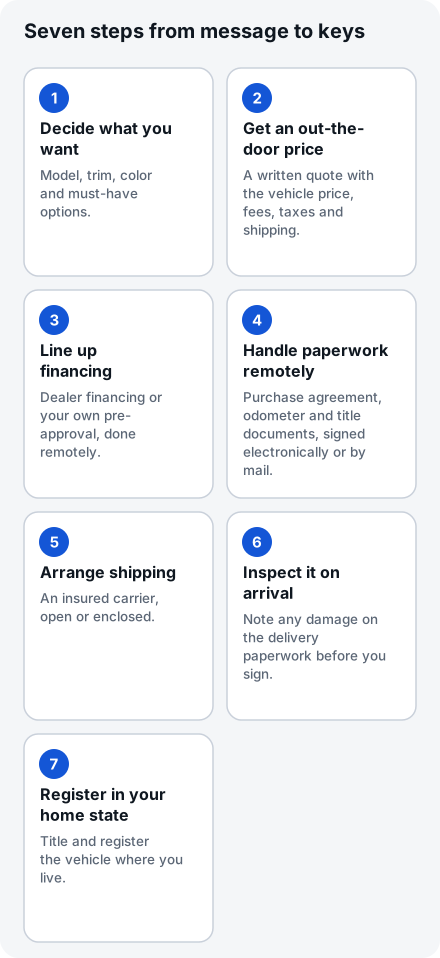
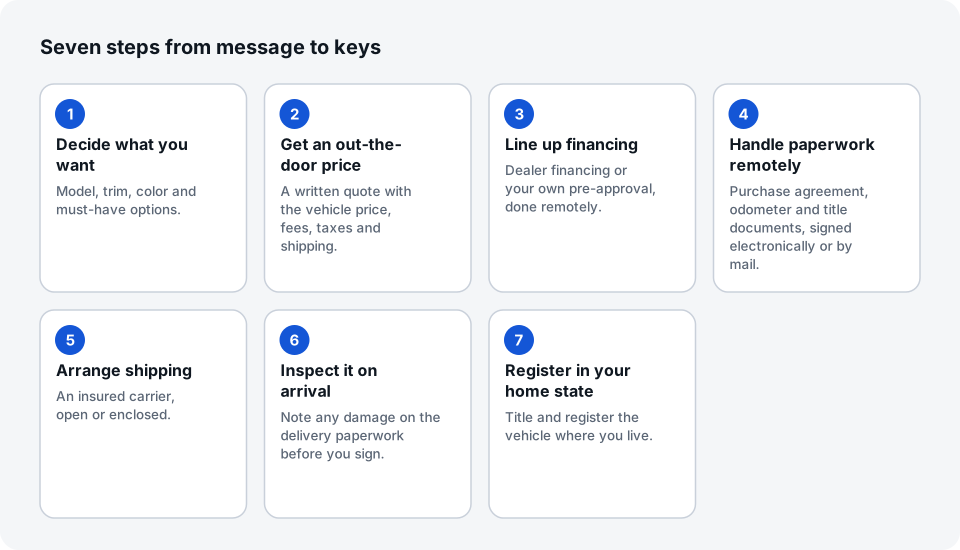
1. Decide exactly what you want
Settle on the model, trim, color and must-have options. The more specific you are, the easier it is to find a match and compare real quotes. If you are unsure, a good salesperson will narrow it down based on how you actually drive.
2. Get an out-the-door price in writing
Ask for a written quote that shows the vehicle price, dealer fees, taxes and registration estimates, and shipping if applicable. Comparing out-the-door totals is the only fair way to compare dealers.
3. Line up financing
You can finance through the dealer or bring a pre-approval from your bank or credit union. Credit applications and approvals can be completed remotely, so you never need to visit the dealership in person.
4. Handle the paperwork remotely
Expect to sign a purchase agreement, odometer and title documents, and financing paperwork. These are usually exchanged electronically or by overnight mail. Ask the dealer to explain which documents you will need for your state.
5. Arrange shipping
Most buyers use an insured auto transport carrier. Open carriers are the common choice; enclosed carriers cost more and protect higher-value vehicles. Ask who is responsible for insurance during transit and how pickup and delivery windows work.

6. Inspect it when it arrives
- Walk around the vehicle with the driver and note any damage on the delivery paperwork before signing.
- Check the odometer, keys, manuals and accessories against your agreement.
- Take photos of the vehicle at delivery.
7. Register it in your home state
You typically register and title the vehicle where you live. Our guide to out-of-state taxes and registration explains what to expect.
. By Tony Tribble, Ballas Chevrolet. General information, not legal or tax advice. Rules vary by state.