Chevy Your WayNew and used Chevrolets

Charging an electric vehicle at home: what to know before you buy

Most electric vehicle owners charge at home overnight. A little planning before you buy tells you whether a standard outlet is enough or a faster home charger makes sense.

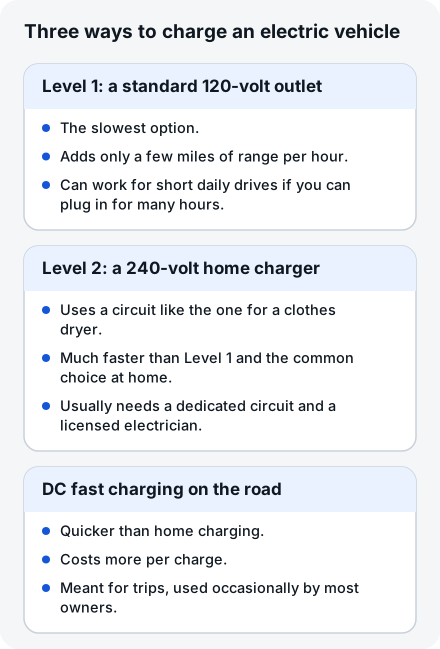
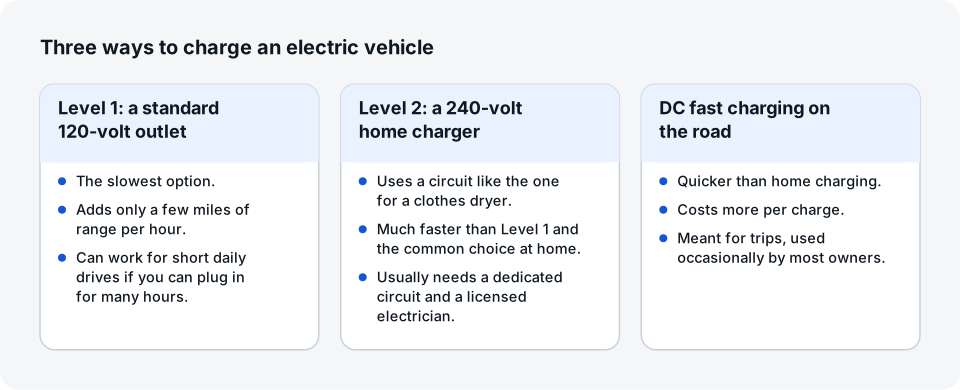
Three ways to charge an electric vehicle: Level 1 on a standard 120-volt outlet, Level 2 on a 240-volt home charger, and DC fast charging on the road
The three kinds of charging and what each is for.

Level 1: a standard household outlet

Level 1 charging uses a standard 120-volt outlet. It is the slowest option and adds only a few miles of range per hour. It can work if you drive short distances each day and can plug in for many hours.

Level 2: a 240-volt home charger

Level 2 uses a 240-volt circuit, like the one for a clothes dryer. It is much faster than Level 1 and is the common choice for home charging. It usually needs a dedicated circuit and a licensed electrician to install it.
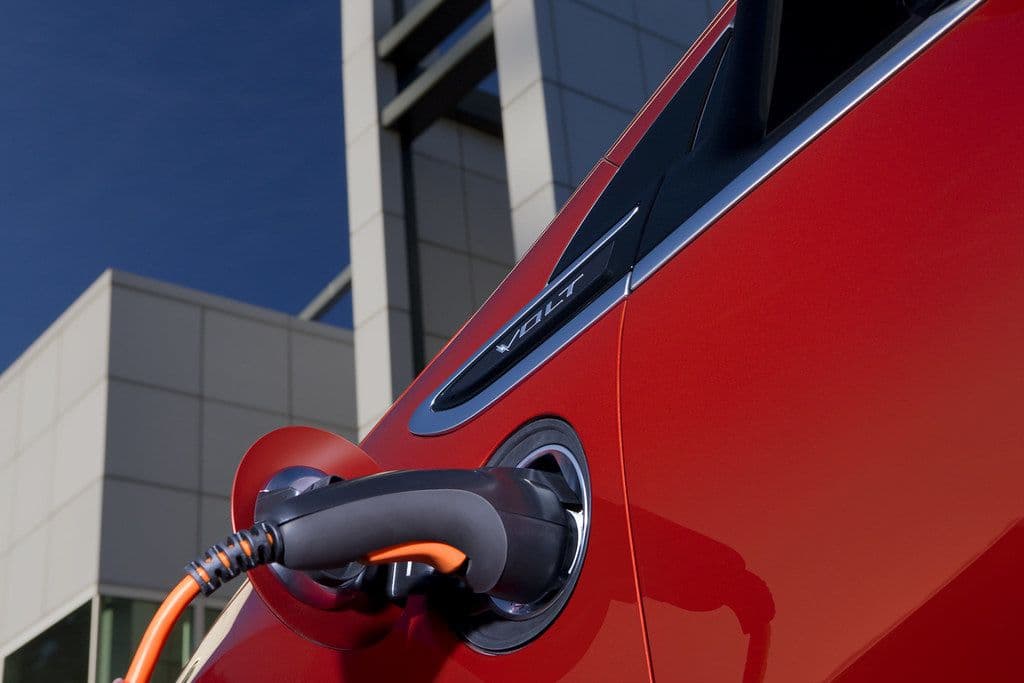
A charging connector plugged into the charge port of a red Chevrolet Volt
A charging connector plugged into an older Chevrolet Volt. A Level 2 home charger uses a 240-volt circuit. Photo: The National Roads and Motorists' Association, CC BY 2.0. Credits

Fast charging on the road

Public DC fast chargers are meant for trips. They are quicker than home charging but cost more per charge, so most owners use them occasionally rather than daily.

How to estimate what you need

  • Add up your typical daily miles. Most people drive far less than a full charge provides.
  • Count the hours your vehicle is parked at night.
  • Think about your longest regular trips and where you would charge on them.
  • Check whether you can charge at work, which helps if home charging is limited.

If you rent or live in a condo

Ask your landlord or association about outlets or chargers near your parking space. Charging at work or at nearby public chargers can fill the gap.

What to ask before you buy

  • How fast does this vehicle charge on a standard outlet and on a home charger?
  • Does the vehicle come with a charging cable?
  • What does the battery warranty cover?
  • Which incentives apply to my situation and state?

. By Tony Tribble, Ballas Chevrolet. General information, not legal or tax advice. Rules vary by state.

Common questions

Do I need a home charger?

Not always. Some drivers do fine on a standard outlet. Many choose a Level 2 charger for convenience. Your daily miles and parking setup decide it.

How long does it take to charge?

It depends on the vehicle, the battery and the charger. A Level 2 charger is much faster than a standard outlet. Tony can give you realistic numbers for the model you choose.

Are there incentives for EVs?

Not federally: the federal clean vehicle tax credit ended for new and used EVs acquired after September 30, 2025, including leases, and the home charger credit ended for equipment installed after June 30, 2026. Some states, cities and electric utilities still offer rebates, charger discounts or off-peak rates. Check your state energy office or utility, and confirm with the program itself.

Two quick questions. Then your specialist takes over.

Tell us how you like to shop and what fits your budget. Here is exactly what happens next.

  1. 1Within a few hoursYour specialist, Tony Tribble, texts or calls you from 260-668-6804. Save the number so you know it's him.
  2. 2Same or next business dayYou get matching Chevrolet options and honest numbers, emailed and texted.
  3. 3On your schedulePick the one you love, then choose pickup in Swanton or delivery to your door.

Tony Tribble, Sales Consultant at Ballas Chevrolet260-668-6804

Let’s find your Chevy

Step 1 of 2
How do you want to shop?
Comfortable monthly payment

No obligation. Your info goes to Tony only.